
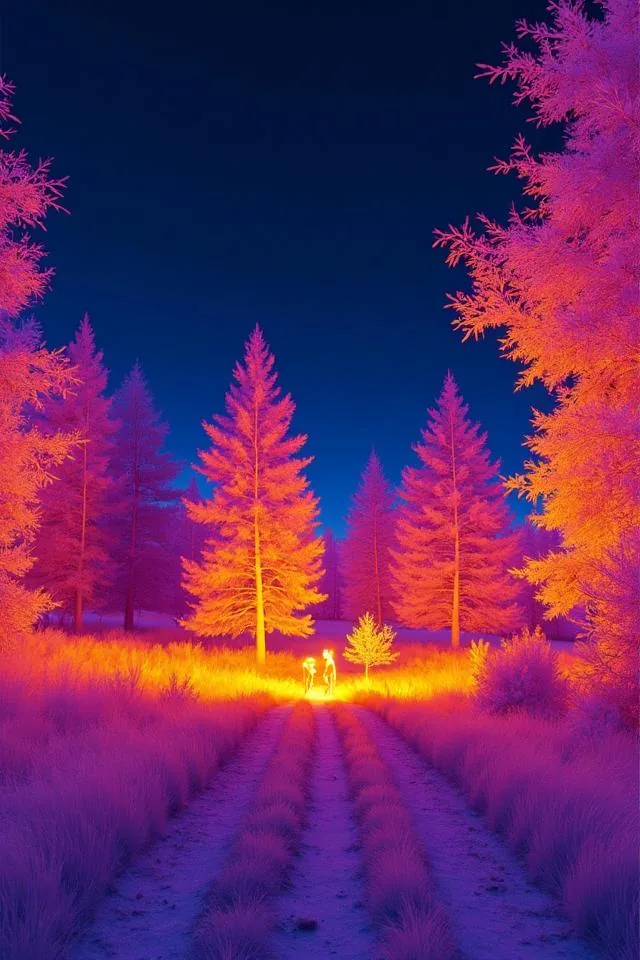
Four things to do before shooting
- Clean the lens. Smudges and haze are especially obvious around night lights.
- Turn on the grid to keep horizons and architecture steady.
- Support the phone on a wall, table, or small tripod.
- Place the subject near a lamp, window, or shop light instead of fully backlighting it.
Exposure and focus
- Tap the subject and lock focus so the camera does not hunt during a sequence.
- Blown highlights cannot be recovered, so slightly lower exposure when needed.
- For moving people, shorten the night exposure and keep the outline rather than chasing maximum brightness.
Composition and color
- Use a lamp, window, or reflection as a visual anchor.
- A night scene does not need every corner lifted; some deep shadow creates space.
- Keep one original, then try thermal, Night Vision, or Grayscale for a style version.
Check the image after capture
Zoom into edges, eyes, hands, and signs. If blur or severe underexposure removed those details, a filter can change the mood but cannot restore the information. Save the strong version to Photos and history, then choose a shareable crop.
Frequently asked questions
How do I stop iPhone night photos from being blurry?
Stabilize the phone first, reduce movement during capture, and choose an exposure time that matches whether the subject is moving.
Can a filter reduce noise?
A filter can change how noise looks, but actual noise reduction comes from more light, steadier capture, and camera processing.