
Do three safety checks first
- Leave one person at the last-seen location in case the pet returns.
- Bring a leash, treats, and a familiar blanket or toy, not only a phone.
- Set a boundary around roads, construction, and water. Do not enter an unsafe area to get a photo.
A useful low-light search order
Start with the home entrance, garage, stairs, bushes, and warm sheltered spots. Cats often choose quiet, narrow spaces; dogs may follow familiar scent paths. Stop and listen between sections instead of moving a light continuously.
Use an iPhone to observe and document
- Hold the phone with two hands or stabilize it to reduce low-light video blur.
- Scan with a wide view first, then move closer when you see an outline or reflection.
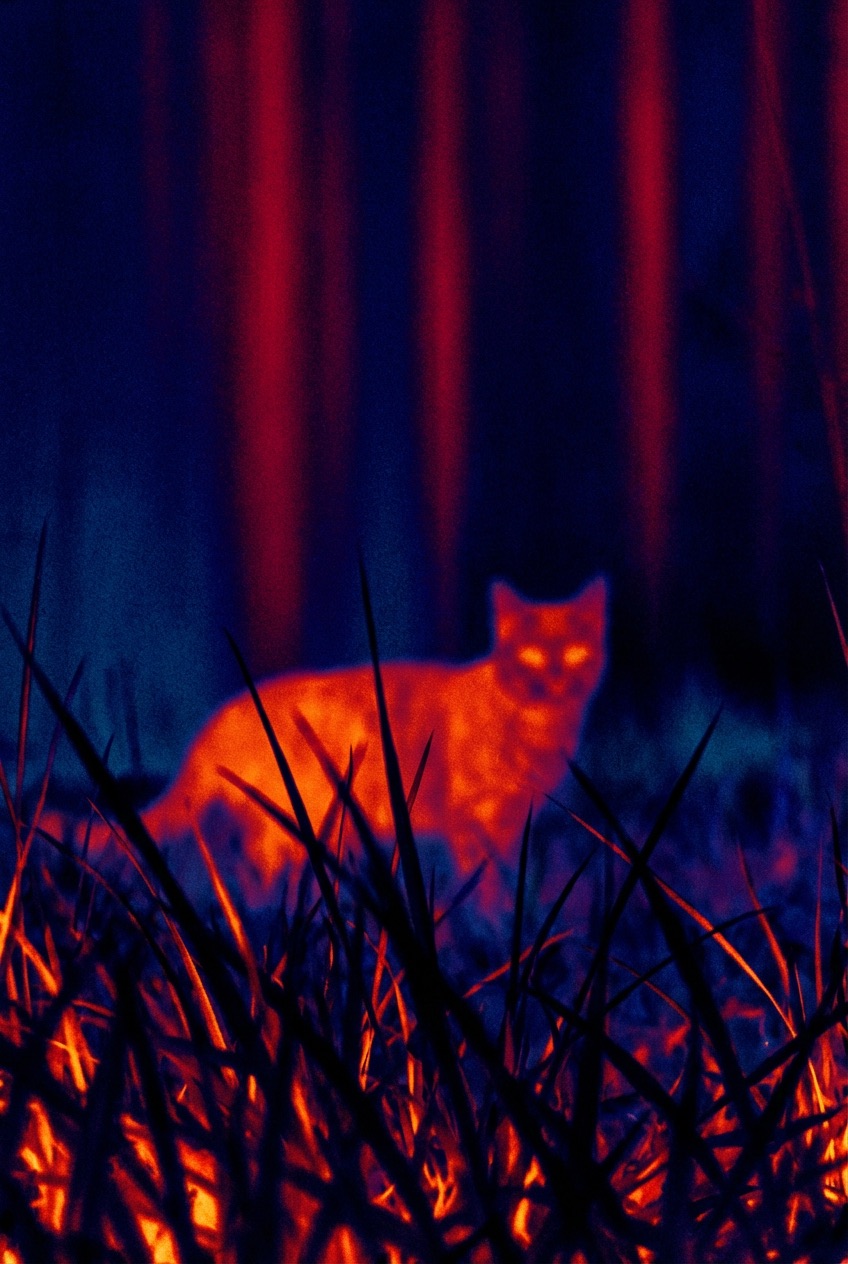
- Try a Night Vision or thermal-inspired look for visual clarity, but treat it as an observation aid.
- A filter is not an infrared detector. Do not enter an unsafe area because the screen looks dramatic.
After you find them
Use a familiar voice and let the pet approach rather than chasing. Once the area is safe, take a photo or short video. Save it to your history so you can share it with family, neighbors, or a rescue group.
Frequently asked questions
Can a thermal filter find a hidden cat?
There is no guarantee. It processes visible light and cannot see through bushes, walls, or total darkness.
Should I use flash when searching for a pet?
It depends. A bright flash can startle a pet and overexpose a close subject; steady, softer light is often a better starting point.